There has been a dramatic change in policing over the past few decades. Gone are the days when law enforcement was taken to be only reactive, that is, only responding to a crime after it has happened. Modern-day policing is an evolving combination of community-oriented policing, cutting-edge technology, intelligence-led policing, and prevention today. It concerns the preservation of the safety of people and the establishment of trust, accountability and the adjustment to new types of crimes in the ever-complicated world.
To security professionals and other agencies that are privately based, such as MF Security, it is important to learn the current trends in policing. The distinction between law enforcement and security association by the state and the business sector has never had a greater role.
From Reactive to Proactive Policing
The traditional policing model paid much attention to responding to the service calls. The modern-day policing focuses on proactive prevention of crime, whereas response is considered vital. Officers are now able to analyze the patterns, see the high-risk zones, and use resources in strategic positioning before crimes become more critical.
Evidence-based practices enable the departments to envision possible threats. Crime mapping, predictive analytics, and intelligence-sharing systems can assist the law enforcement in better allocation of personnel. This change lowers reaction rates and eliminates recidivism, developing safer communities.
Visible presence is also referred to as proactive policing. Their frequent patrols, interaction with the neighborhood and collaboration with local organizations will prevent crimes before they begin.
Community-Oriented Policing
Emphasis on community-oriented policing is one of the greatest changes in the contemporary policing. Enforcement authorities have now been seen as less critical than public trust by law enforcement agencies.
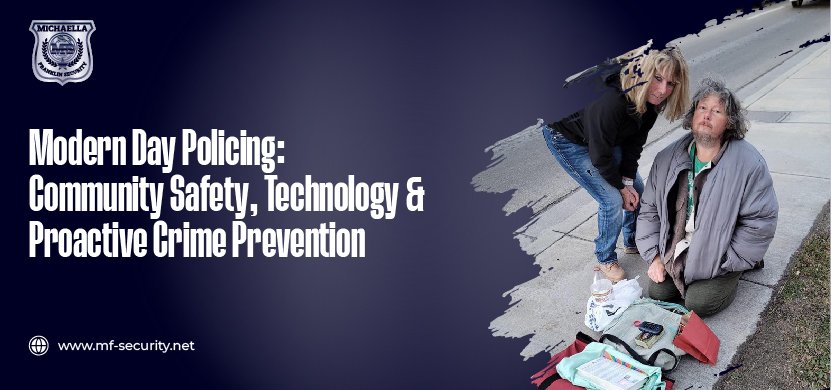
Community policing is aimed at establishing connections between the police and community members. Officers do not just associate with schools, local businesses, and neighborhood organizations only in cases of emergencies. Mutual respect and cooperation develop as a result of these interactions.
The more communities are confident in law enforcement, the more likely they will report suspicious behavior, give useful information and be cooperative in safety programs. This will enhance community safety, as well as lower the levels of tension between law enforcers and the community they protect.
Protect your neighborhood with our community protection security services designed to prevent threats and improve public safety.
Technology in Modern Law Enforcement
Technology has transformed modern-day policing in powerful ways. From body-worn cameras to advanced surveillance systems, technology improves transparency and operational efficiency.
Body Cameras and Accountability
Body cameras enhance accountability and provide clear documentation of interactions. They protect both officers and citizens by creating accurate records of events.
Real-Time Data Access
Officers now have access to real-time databases through mobile devices in patrol vehicles. This allows instant verification of identities, warrants, and vehicle registrations.
Surveillance and Monitoring Systems
Advanced surveillance tools, license plate recognition systems, and integrated communication networks enable faster investigations and coordinated responses.
Technology also plays a role in cybersecurity, as digital crimes continue to rise. Modern policing must address threats that exist online just as seriously as those in physical spaces.
Addressing Emerging Threats
Street crime is no longer the only type of policing that can be observed in modern times. Cybercrime, identity theft, human trafficking, organized retail crime, and terrorism are some of the most complex threats that law enforcement agencies face nowadays.
The crimes frequently span across the states and countries, and the collaboration among local, national, and international law enforcement needs to be organized. The intelligence-sharing platforms and the joint task forces have been created as vital tools.
Simultaneously, the officers receive more training on crisis intervention, de-escalation tactics, and mental health awareness. A large number of police calls have people engaging in distress, as opposed to criminal intent. The contemporary training prepares the officers to handle such sensitive situations in a safe and relevant manner.
The Role of Private Security
Nowadays, the importance of private security companies in the process of general safety is significant. To avoid cases that may require the intervention of law enforcement agencies, businesses, residential communities, and organizers of events depend on the services of professional security staff.
The force of private security is the force multiplier. Through property surveillance, access control, patrol, and response to disruptions, security professionals make the task of public police departments much easier.
The cooperation between the police force and the security personnel will guarantee a quicker exchange of information and a coordinated operation in the event of an emergency. Such collaboration enhances the protection of the community as a whole and improves the threat mitigation measures.
Accountability and Transparency
Contemporary policing is also contingent upon the elevated levels of transparency and accountability. The expectations of the people are changing and the law enforcement departments are more scrutinized than ever.
Clear use-of-force policies, frequent training refresher, community oversight boards, and better reporting systems are emphases of the departments. Openness creates a sense of legitimacy, and cooperation is created by legitimacy.
The security professionals should equally observe high ethical standards that involve professionalism as well as being fair and legal in their operations.
Training and Professional Development
Today’s officers receive extensive training beyond basic law enforcement tactics. Modern training includes:
- De-escalation techniques
- Cultural awareness
- Mental health crisis response
- Advanced defensive tactics
- Cybercrime investigation
Continuous professional development ensures officers are prepared to handle modern challenges effectively and responsibly.
Private security teams similarly invest in ongoing training to maintain readiness, compliance, and operational excellence.
The Future of Modern Policing
Policing strategies will change with the transforming society. The use of artificial intelligence, drone technology, and high-level surveillance systems will probably be further unified into operations. Meanwhile, being able to preserve the trust of the population will be core.
Police work of the modern day is not merely about enforcement but prevention, collaboration, responsibility and adjustment. It demands a compromise between power and understanding, technology and human discretion.
In the case of companies such as MF Security, it is possible to form more powerful collaborations, develop effective protection mechanisms, and ensure the safety of clients and communities with the help of knowledge of these changing trends.
Today, public safety is a collective responsibility. Modern policing has managed to adjust to the ever-changing world through collaboration, innovation, and commitment to professionalism.
Learn how trained professionals support law enforcement and prevention. Read our guide on security officer duties and modern crime prevention roles